

All Things New?
Revelation 21:1-5
And I saw a new heaven and a new earth: for the first heaven and the first earth were passed away; and there was no more sea. And I John saw the holy city, new Jerusalem, coming down from God out of heaven, prepared as a bride adorned for her husband. And I heard a great voice out of heaven saying, Behold, the tabernacle of God is with men, and he will dwell with them, and they shall be his people, and God himself shall be with them, and be their God. And God shall wipe away all tears from their eyes; and there shall be no more death, neither sorrow, nor crying, neither shall there be any more pain: for the former things are passed away. And he that sat upon the throne said, Behold, “I make all things new.” And he said unto me, “Write: for these words are true and faithful.”
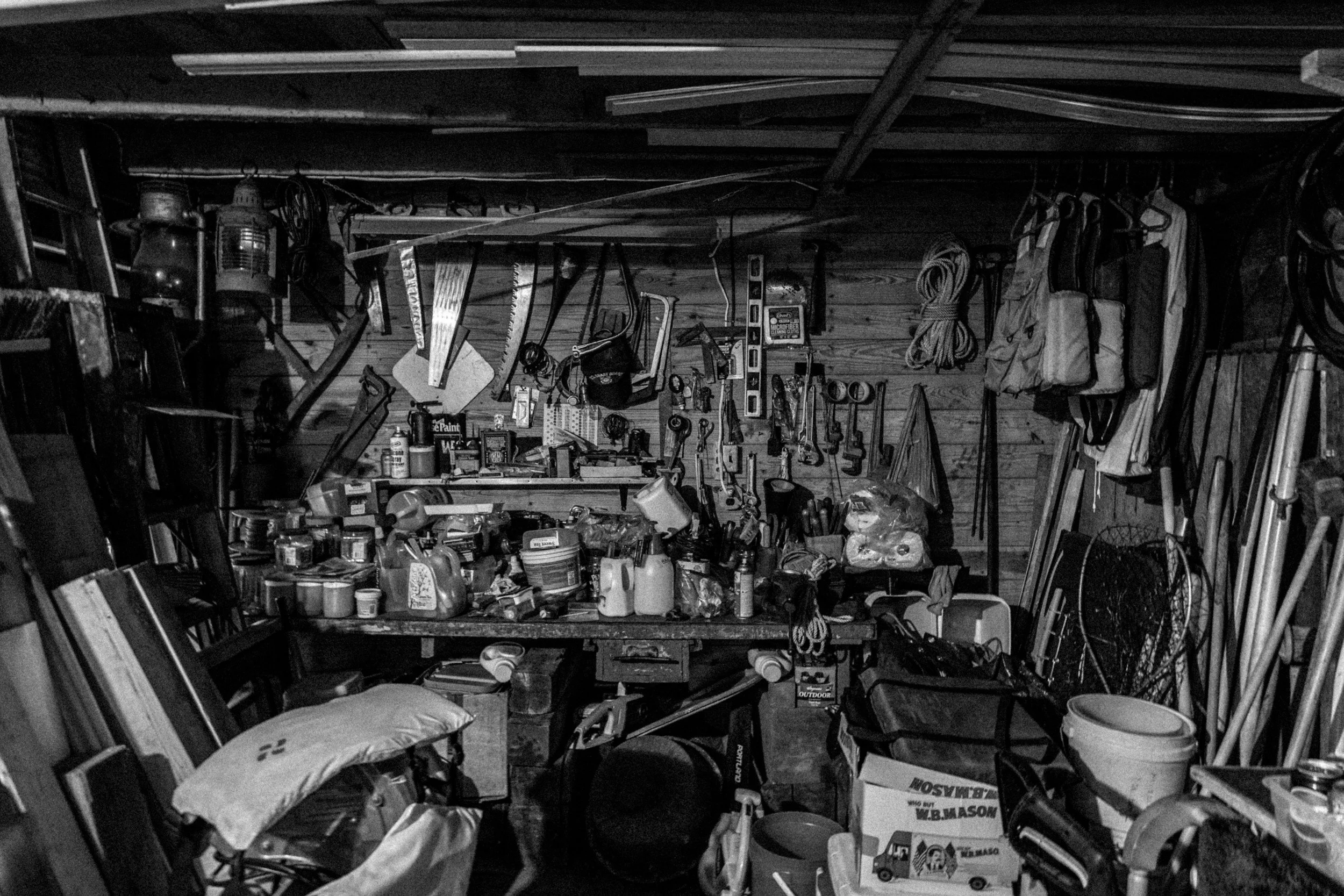
My Nanny recently invited me over to go through some of my late Papaw’s belongings in his old tool shed. I immediately noticed that his shovels and rakes seemed to be heavier and more durable than any I had ever owned. They may have had some rust from the years of use, but I certainly had no fears that they were in jeopardy of breaking if I decided to use them again. I was also amazed at the old glass jugs, coffee cans, and wires that had been repurposed over and over again for storing nails, batteries, bulbs, tools, rags, and just about anything you could think of. As I went through his things, I couldn’t get over just how resourceful he had been over the years. “Trash” seemed like a foreign concept to his tool shed, as anything and everything could surely be useful if he had the imagination for it.
While being the heir to some of his gardening and work tools is invaluable to me, I’m also grateful for the ways his life and witness – even after his death – have continued to challenge my notions of what the “good life” is really about. That day in his tool shed I was reminded that newness and novelty are not always what they’re cracked up to be. Realizing that my grandchildren won’t likely have many of my possessions to inherit, mostly because they will have broken down and trashed at that point, was truly a lesson from the popular adage that “they don’t make ‘em like they used to.”
Now I’m not really one to engage in intoxicating nostalgia or to overly romanticize some past that never actually existed. I’m not convinced that everything was, in fact, better “back in the good ole days.” Yet, I do wonder what we have lost in our culture’s constant pursuit of the new and novel. We live in an age where we churn out and buy more cheap goods and products than we know what to do with, and it seems like our jobs, lives, and attention spans are becoming more and more automated by machines not of our making every day. Dollar menus and affordability may have made us richer in some ways, but we’d do well to remember that such things also come at a cost.
If fixing and restoring (and perhaps even redeeming) seem to be relics from a distant past replaced by all things cheap, plastic, and shiny, what kind of newness can we trust? While it’s true that most folks today take the “out with the old, in the new” approach when things get a little tough, I do think Jesus offers us a different way of seeing and engaging a world often left for the garbage collector.
It is my belief that Jesus is making all things new – past, present, and future. But the beautiful thing about the newness Jesus brings is that it is always a restoration, redemption, and healing of that which was once useless or dead, not his discarding or disposal of what we might deem trash. To put it within the context of a few metaphors from the Bible, Jesus leaves the 99 for the one. He sweeps the whole house for his one lost coin. He is the gentle Father welcoming the prodigal son back home. He is the potter that never throws away the clay. He is the Savior who never saw a sinner he didn’t love.
We’ve journeyed just enough for the polish of another new year to wear off a bit, and if you’re like me, the best of intentions and all those life-changing resolutions of “New Year, new me” have already been derailed and filed away for next year. But what if the Kingdom of God is not about hollow resolutions to be perfect versions of ourselves? What if Jesus is simply inviting us to see ourselves – our strengths, flaws, fears, convictions, communities, and neighbors – in light of his restoring Love?
Following the Lord who “makes all things new” is not some act of willful ignorance, as if optimism or rose-colored glasses are all our hurting world needs. Nor is God’s redemption about eternal cycles of displacing the old and worn down with the cheap fixes of new trends. Rather, our participation in God’s redemption of the world starts with our capacity to see the inherent value and worth of all those people and places that have seemingly been left for dead by Wall Street and Pennsylvania Avenue. In this way, a “new heaven and new earth,” perhaps even a “new Appalachia,” cannot be discovered or developed into relevance. We must, instead, learn to value, protect, and care for our neighbors, the land, its resources, and our communities as if they can’t be replaced – because they can’t.
May we learn to find the joy of the Lord in old tool sheds, the lumps of clay, the things thrown out, the people kept out, and the kind of death that brings new life. May our hearts be set on the renewal of our communities and not their replacement. May our hands be about the work of restoration and not rupture. May our souls be open to healing and not severing. And finally, may we trust that God is already working in our lives, our homes, and our communities to bring the newness we actually need – even if it means learning to look at the old and the familiar like you’ve never seen them before.